Skin Assessment Before an Aesthetic Device Procedure: Skin Type, Barrier and Contraindications
Lorema Estetic
Skin assessment before an aesthetic device procedure starts with one principle: skin types are only part of the decision, not a preset to select automatically. The real question is whether the planned treatment is appropriate for this client today, which factors may change the protocol and whether the procedure should be postponed or referred for medical evaluation.
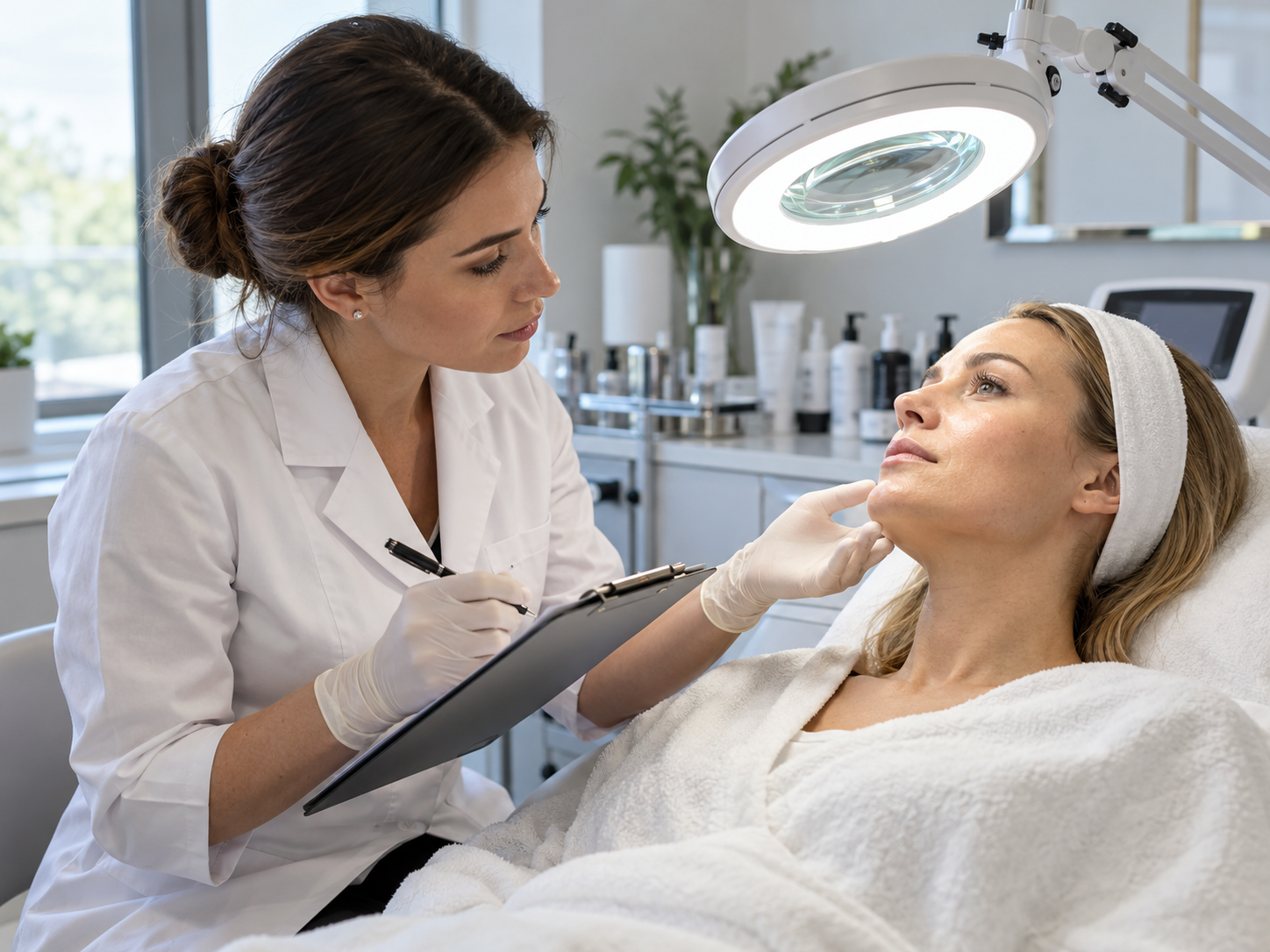
For an aesthetic business, this is an operational standard as much as a clinical-safety habit. A sophisticated device cannot compensate for inconsistent client assessment across the team.
Aesthetic skin assessment is not the same as medical diagnosis
The updated Mediskin Check-Up protocol for aesthetic medicine combines history taking, clinical examination and instrumental assessment under standardized conditions. Its main lesson is useful beyond medical aesthetics: treatment planning should not depend on one visible feature or one number from a scanner.
An aesthetic practitioner assesses the factors relevant to a cosmetic procedure and recognizes when a concern is outside that scope. A suspicious lesion, significant inflammation, signs of infection or an unclear dermatologic problem should lead to medical assessment rather than an attempt to cover the issue with a device-based treatment.
Skin type and skin condition are not the same thing
It is useful to separate a baseline skin type from the skin's current condition. Cleveland Clinic's guide to skin types describes dry, oily, normal, combination and sensitive skin and notes that presentation can shift with age, hormones, stress, climate and season.
This means “oily skin” is not a treatment protocol. Oily skin can also be dehydrated or irritated; dry skin can show active inflammation; combination skin can react differently across facial zones.
-
Skin type: dry, oily, normal or combination — a useful baseline related largely to sebum distribution and overall behavior.
-
Sensitivity and reactivity: stinging, redness or poor tolerance can occur alongside any baseline type.
-
Current condition: dehydration, inflammation, scaling, barrier disruption, pigmentary or vascular changes are assessed separately.
-
Fitzpatrick phototype: a different classification based on UV response and especially relevant to light- and laser-based procedures.
Skin analysis before a device procedure: a practical assessment workflow
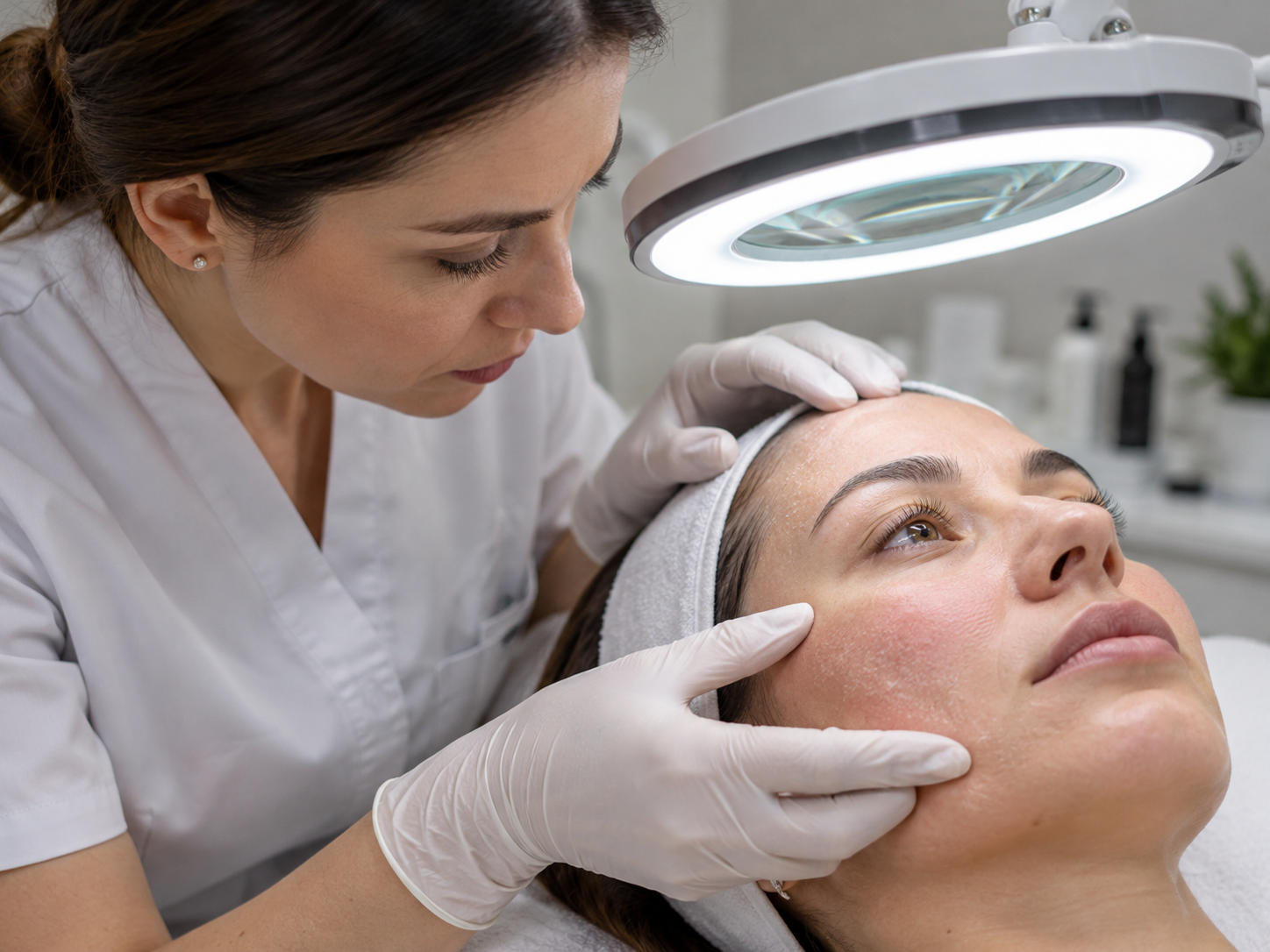
A practical workflow starts with the client rather than the machine. The same sequence can be adapted before laser, RF, microneedling, ultrasound, LED and other technologies, while device-specific instructions remain authoritative.
-
1. Goal and history. Clarify the concern, previous procedures and reactions, current active skincare, recent sun exposure, medications and other factors that may affect the treatment decision.
-
2. Visual examination. Look at color, inflammation, erythema, scaling, skin integrity, pigmentary or vascular changes, texture and the treatment area itself.
-
3. Separate skin type from current condition. Sebum, dehydration, sensitivity and active inflammation are different variables.
-
4. Assess Fitzpatrick phototype when light or laser is involved. Phototype is not simply skin color; UV response and tanning/burning history matter.
-
5. Assess barrier status and recovery. Marked irritation, fissuring, active scaling or tenderness may change timing, preparation or treatment intensity.
-
6. Check contraindications and red flags for the specific device. If the presentation is unclear or outside aesthetic scope, do not proceed automatically.
Practical matrix before a device procedure
|
What to assess |
Why it matters |
Especially important for |
When to postpone |
|
Skin type and current condition |
Do not confuse sebum, dehydration, sensitivity and inflammation |
Any device-based procedure |
The presentation is unclear or reactivity is marked |
|
Barrier and skin integrity |
Estimate tolerance and recovery |
Microneedling, RF and laser procedures |
Fissuring, damage, active scaling or tenderness |
|
Fitzpatrick type and tanning |
Assess pigmentary risk and parameter selection |
Laser and IPL |
Recent tanning or uncertainty about a safe protocol |
|
Inflammation and signs of infection |
Avoid aggravating an active process |
Invasive and energy-based procedures |
Significant inflammation or suspected infection |
|
History and contraindications |
Account for medications, previous procedures and risk factors |
All technologies |
A contraindication or red flag is present |
Why barrier status changes the decision
Skin barrier function cannot be reduced to a single casual test. A review of methods used to assess barrier function covers TEWL, hydration, pH and other techniques and highlights the importance of standardized measurement conditions.
In practice, obvious irritation, pain, active scaling or disrupted skin integrity should not be ignored simply because a procedure is booked. The treatment plan, preparation and timing need to be reconsidered according to the device protocol.
Fitzpatrick phototype matters most when energy interacts with pigment
The Fitzpatrick classification describes response to ultraviolet exposure rather than being a simple light-to-dark color scale. It becomes particularly relevant with laser and light technologies that interact with melanin.
A recent review of laser complications in Fitzpatrick IV–VI skin emphasizes greater caution and practitioner expertise in more pigmented skin. Risk depends on the interaction between phototype, device parameters and operator decisions.
The same machine therefore does not mean the same protocol. Phototype, current tanning, pigmentation and barrier status are assessed before settings are selected.
How assessment changes device selection
A good assessment does not always end with “choose a different machine.” Sometimes it confirms the planned procedure; sometimes it changes the objective, adds a preparation phase or shows that treatment should be delayed.
-
Laser and IPL: phototype, current tanning, pigmentation and inflammation are central to risk assessment.
-
Microneedling and RF microneedling: skin integrity, active inflammation and device-specific contraindications need to be considered.
-
Ultrasound, RF and other energy-based systems: history and device-specific exclusions determine whether and how treatment is appropriate.
-
LED and lower-intensity protocols: non-invasive does not mean assessment-free; photosensitivity, active skin concerns and the actual treatment goal still matter.
Do you need a skin analyzer?
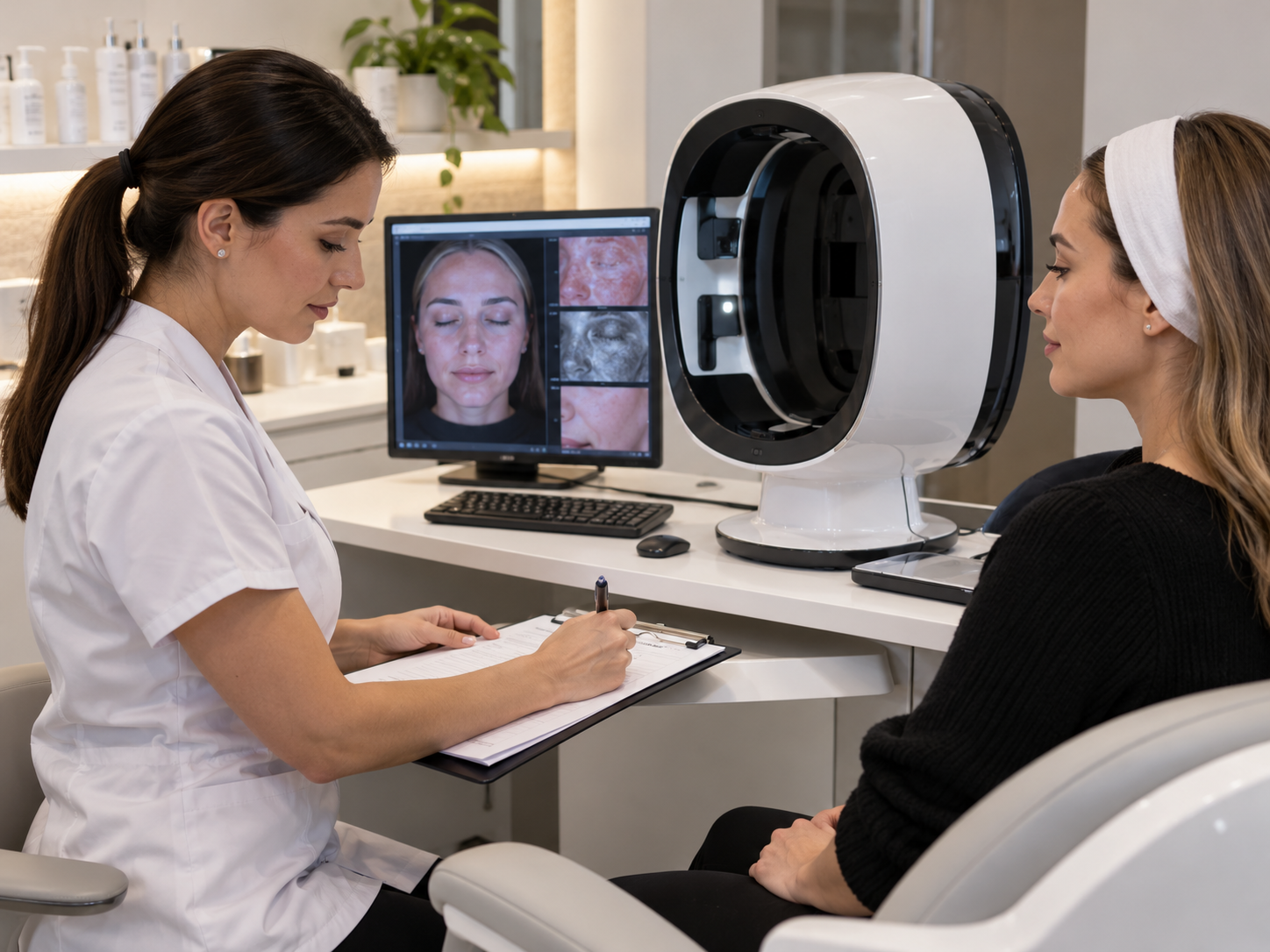
Digital imaging, sebum measurement or corneometry can improve documentation and make follow-up more reproducible. They are useful additions, not substitutes for history taking and professional examination.
Research on instrumental skin assessment shows that sebum, hydration and barrier measurements depend on the method and test conditions. A screen can provide data, but it should not automatically generate a diagnosis or device choice.
5 required fields in a standardized salon assessment card
For a salon or aesthetic practice, these five fields turn skin assessment from an individual habit into a team standard. The record captures the reasoning behind the decision and makes it easier to explain why treatment proceeds today or is postponed.
-
client goal and expected outcome;
-
relevant history, previous treatments and active skincare;
-
skin type, current condition, Fitzpatrick phototype and key observations;
-
barrier concerns, red flags and device-specific contraindications;
-
chosen procedure, rationale, baseline photography and review plan.
The LorEmA Estetic Basic Cosmetology Course includes skin assessment, skin types and history taking in its training content. For a new practitioner, this reasoning should come before memorizing device settings.
When not to start the device procedure
There is no single contraindication list that applies to every aesthetic device. Eligibility depends on the technology, treatment area and manufacturer instructions. The professional decision-making principle is broader.
Contemporary periprocedural aesthetic algorithms begin with medical history and skin examination before moving to individualized risk factors such as inflammation and pigmentary complications.
Significant active inflammation, signs of infection, damaged skin, an unusual lesion or any presentation the practitioner cannot confidently interpret should trigger medical evaluation before the aesthetic plan continues.
FAQ
How do you determine skin type before a device procedure?
Assess sebum distribution, dryness, client-reported sensations and differences between facial zones. For procedure planning, current condition, phototype, barrier status and contraindications must be assessed separately.
What is the difference between skin type and skin condition?
Skin type is a relatively stable baseline such as dry, oily or combination. Condition can change: the skin may be dehydrated, irritated, inflamed or sensitized at a particular time.
Is a skin analyzer required?
No. Instrumental systems are useful for measurements and documentation, but the core decision still depends on history, examination and practitioner judgment.
Why assess Fitzpatrick skin type?
It is particularly important before laser and light procedures because it informs risk assessment and parameter selection.
Can a device procedure be performed on irritated skin?
It depends on the cause and technology. When the barrier is compromised or the presentation is unclear, postponing and reassessing is the more cautious approach.
What should an aesthetic practitioner learn before using devices?
History taking, skin type versus condition, Fitzpatrick phototype, barrier assessment, red-flag recognition, contraindications and knowing when medical referral is appropriate.
Skin assessment is the first stage of a device procedure, not an optional extra
Skin types are useful categories, but professional treatment selection is broader: current condition, phototype, barrier status, client history and device-specific risk all matter. This sequence prevents treatments from being chosen simply because a machine is available.
To learn this workflow systematically before moving into device protocols, explore the LorEmA Estetic Basic Cosmetology Course program in Chișinău. Good assessment is what allows a practitioner to decide not only what can be done, but when it is better not to treat.
