How Salons Should Compare Diode Lasers: Black Mamba vs MeDioStar Monolith
Lorema Estetic
When a salon starts looking for a professional laser hair removal device, wattage is often the first figure to attract attention. If one system is rated at 1,200 W and another reaches several thousand watts, it is tempting to assume the larger number automatically means faster and better treatment.
Professional equipment cannot be compared that way.
Power interacts with wavelength, spot size, pulse duration, repetition rate and cooling. A salon owner must also consider the actual workflow: which areas dominate the appointment book, which skin phototypes the team sees, how many procedures are performed each day and whether the clinic plans to expand its laser services later.
A useful diode laser comparison therefore begins with workflow rather than a single specification.
What really matters when choosing a diode laser
Laser hair removal works by directing optical energy toward melanin in the hair and transferring heat to follicular structures.
Wavelength influences melanin absorption and penetration depth. The NCBI overview of laser hair removal discusses the role of wavelength, skin phototype and treatment parameters in professional hair-reduction procedures.
For a clinic, however, technical specifications only become useful when they are connected to the actual treatment schedule.
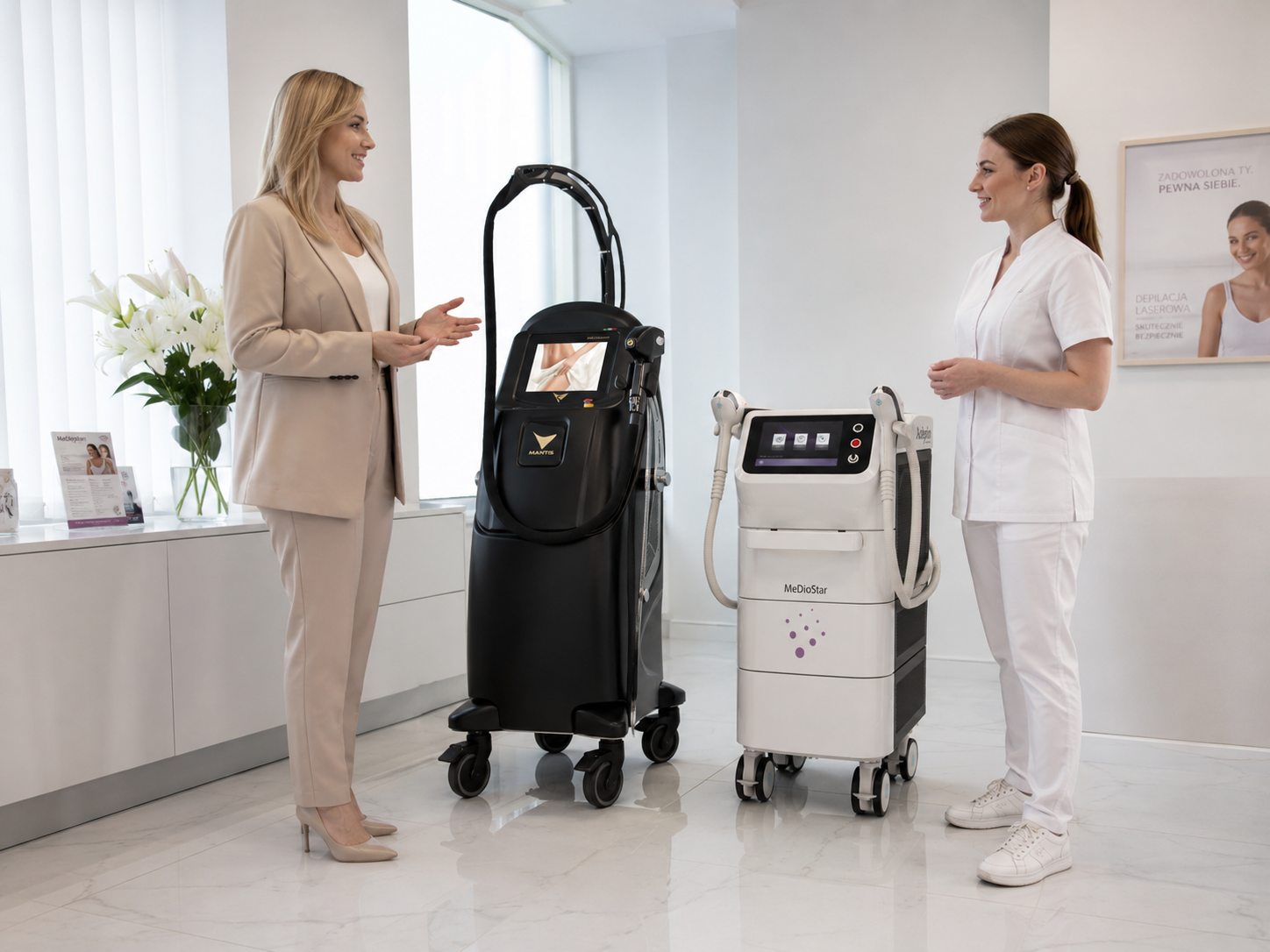
Black Mamba vs MeDioStar Monolith: different system concepts
|
Factor |
Black Mamba |
MeDioStar Monolith |
|
Main wavelengths |
808 + 1064 nm |
810 + 940 nm in Monolith handpieces |
|
Concept |
Dual wavelengths in one handpiece |
Modular platform with different Monolith handpieces |
|
Power |
600–1200 W |
1275–5000 W depending on handpiece |
|
Spot size |
10 × 12 mm |
1.0, 1.5, 3.0 or 10 cm² |
|
Repetition rate |
up to 15 Hz |
up to 20 Hz depending on configuration |
|
Pulse duration |
3–150 ms |
up to 3–400 ms depending on configuration |
|
Cooling |
dynamic contact cooling |
360° contact cooling |
|
Workflow |
one dual-wave handpiece and preset protocols |
multiple handpieces and guided software workflow |
This is why 5,000 W cannot simply be ranked against 1,200 W. The values belong to different handpieces, spot sizes and system architectures.
Criterion 1: Client mix
Black Mamba combines 808 and 1064 nm in a single handpiece.
MeDioStar Monolith uses 810/940 nm in its Monolith handpiece family and offers a more modular configuration.
Before purchasing either platform, the clinic should consider skin tone, recent tanning, hair thickness, medication and previous reactions to light-based procedures. The American Academy of Dermatology recommends avoiding tanning before laser hair removal.
Criterion 2: Treatment areas
Black Mamba uses a 10 × 12 mm treatment spot.
MeDioStar Monolith offers several spot sizes, ranging from precision-focused options to a 10 cm² format for large areas.
That difference matters commercially.
A studio performing mainly small facial and bikini treatments has different priorities from a high-volume clinic where full legs, backs and arms dominate the schedule.
Criterion 3: Operator workflow
Specifications take minutes to read. Practitioners hold the handpiece for hours.
Black Mamba centres the workflow around one dual-wave handpiece and preset protocols.
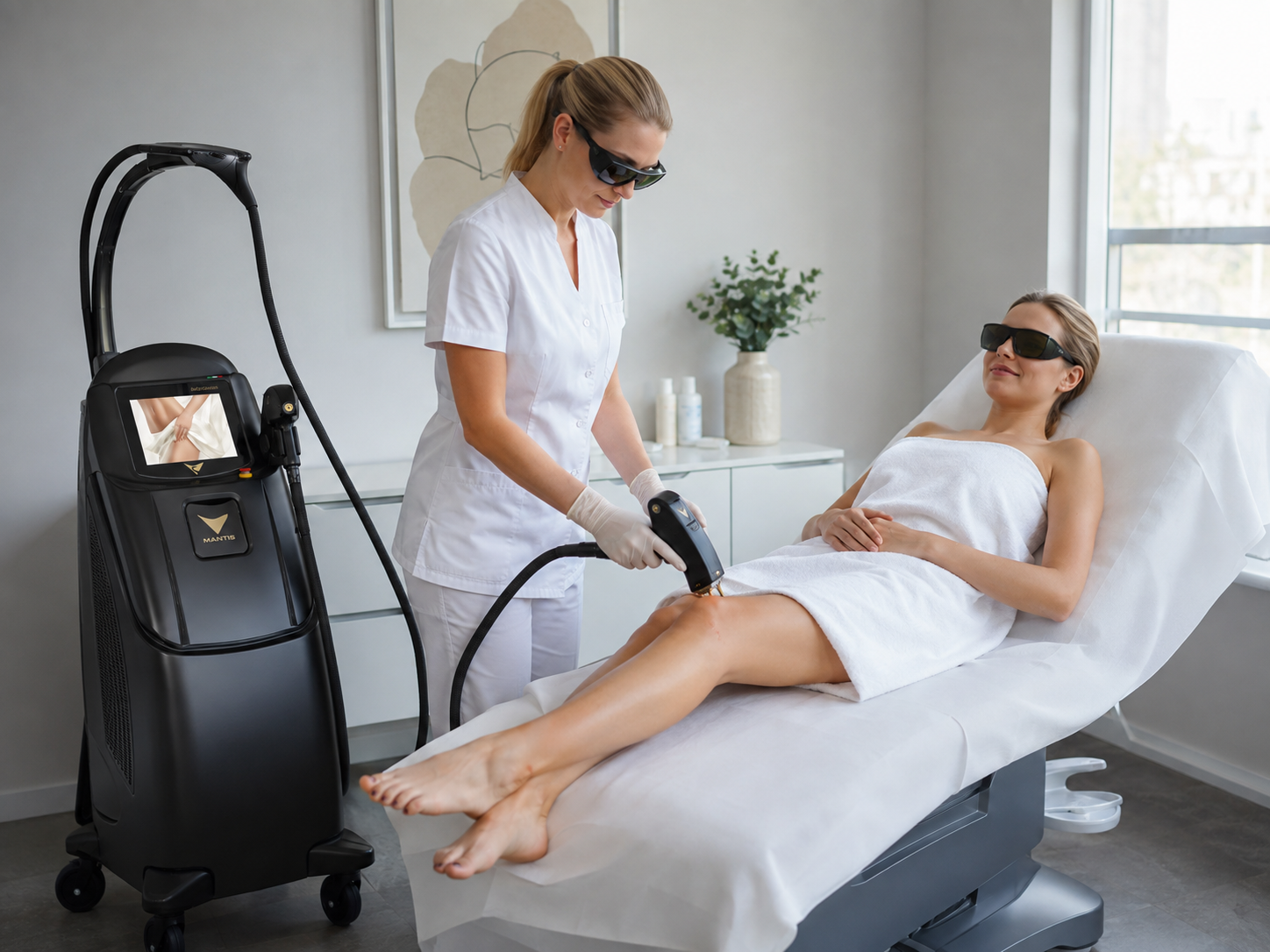
MeDioStar uses a more modular approach with multiple handpieces, two connection ports and guided software.
For a small studio, simplicity may be an advantage. For a busy clinic with several operators, broader workflow flexibility may matter more.
Criterion 4: Cooling
Cooling supports both client comfort and management of thermal exposure at the skin surface.
Black Mamba uses contact cooling with a listed handpiece-tip range of 0–6 °C.
MeDioStar Monolith uses 360° contact cooling.
During a demonstration, test:
-
cooling stability through consecutive treatments;
-
handpiece contact with the skin;
-
ergonomics on large areas;
-
client comfort during longer procedures.
Criterion 5: Power is not the same as treatment speed
MeDioStar Monolith power differs depending on the handpiece and spot size.
Black Mamba is specified at 600–1200 W with a 10 × 12 mm spot and repetition rate of up to 15 Hz.
These figures describe different engineering approaches.
During a demonstration, measure:
-
actual procedure time;
-
number of setting changes;
-
handpiece ergonomics;
-
cooling stability;
-
visible skin response;
-
operator comfort.
That information is more useful than wattage alone.
Criterion 6: How much modularity does the clinic need?
MeDioStar Monolith may suit a clinic that intends to expand its laser department over time.
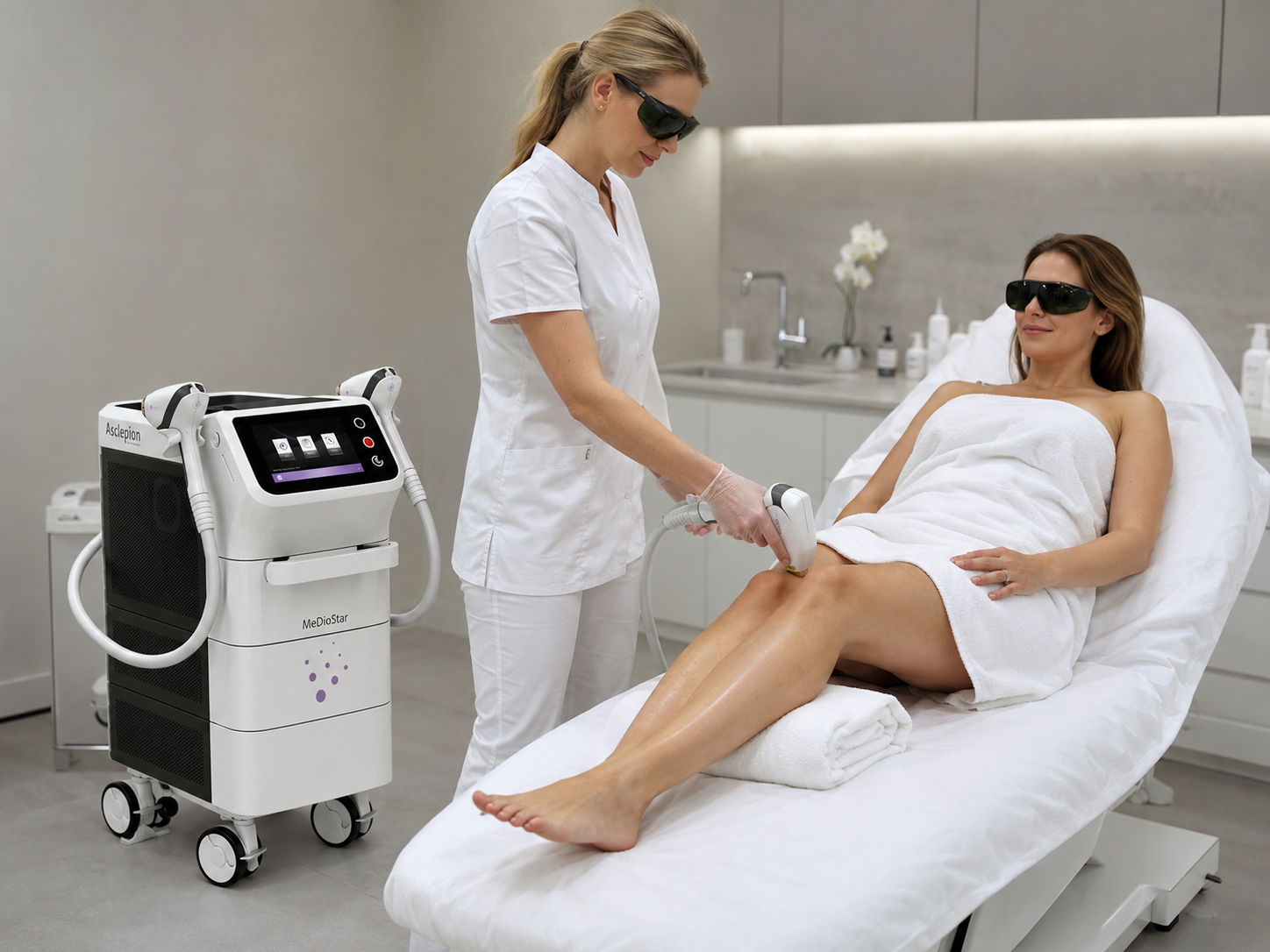
A salon focused almost entirely on hair removal may prefer a more specialised workflow.
The important question is not how many features a platform can theoretically provide, but how many of them will actually be used.
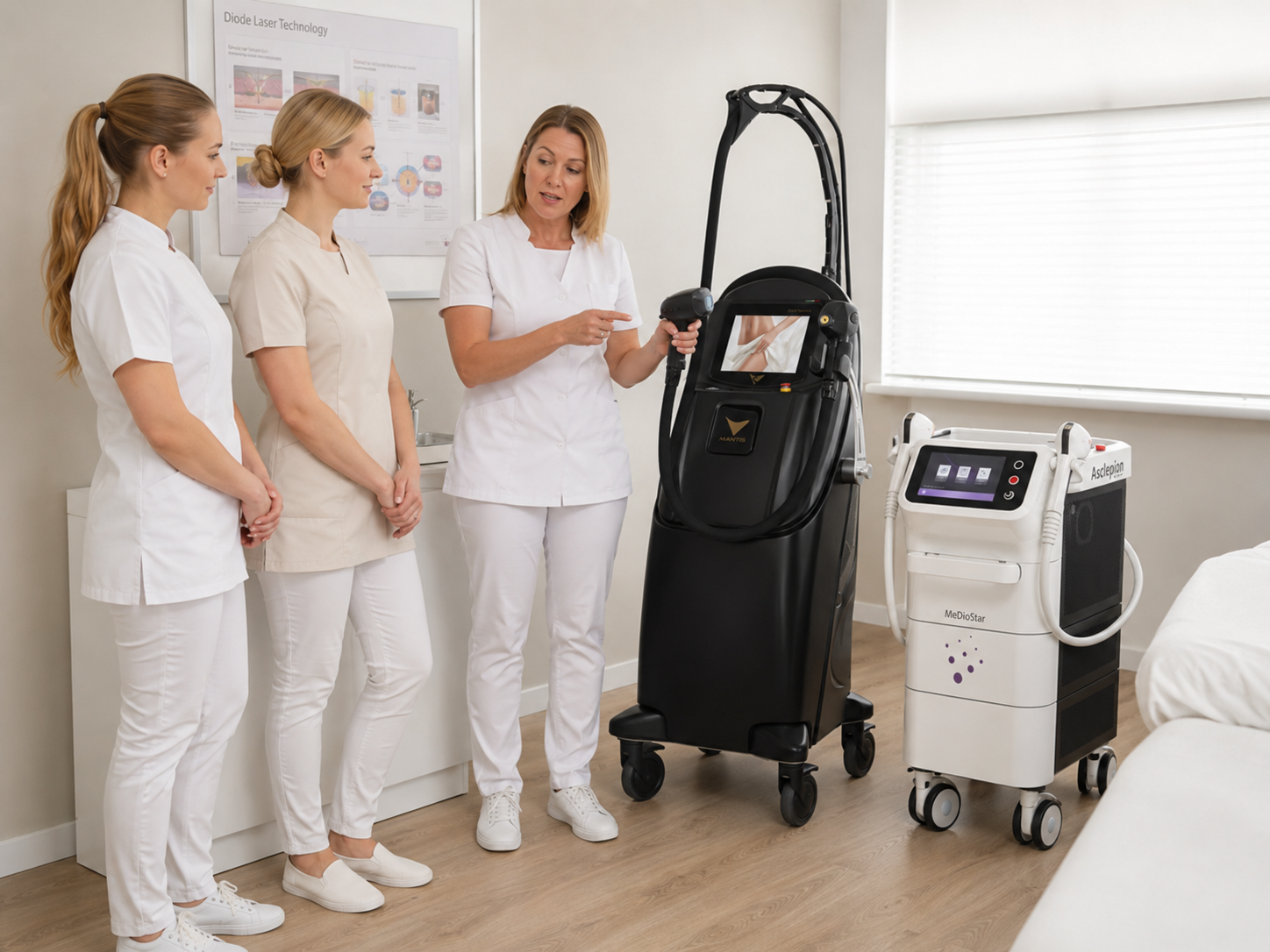
Criterion 7: Training
No software interface can replace skin assessment.
Inappropriate laser parameters can cause burns, blistering and pigment changes. Equipment and operator education should therefore be considered part of the same investment.
The LorEmA Estetic basic cosmetology course covers skin assessment, phototypes, safety and device-based aesthetic methods.
When MeDioStar Monolith may be the better fit
MeDioStar Monolith deserves particular attention when the clinic values:
-
different spot sizes;
-
faster work on large areas;
-
multiple handpiece options;
-
two connection ports;
-
advanced software workflow;
-
future expansion of the platform.
When Black Mamba may be the better fit
Black Mamba may fit a salon looking for:
-
a specialised laser hair removal system;
-
808 and 1064 nm in one handpiece;
-
a consistent workflow;
-
preset protocols;
-
contact cooling;
-
a straightforward configuration without frequent handpiece changes.
How to choose a diode laser: purchasing checklist
Before comparing prices, ask:
-
Which handpieces are included?
-
Which wavelengths are available in the quoted configuration?
-
What spot sizes will the team actually have?
-
How are protocols adapted for different phototypes?
-
How does cooling perform during consecutive procedures?
-
Which consumables are required?
-
What operator training is included?
-
How is technical service organised in Moldova?
-
Which options can be added later?
-
Can the device be demonstrated on the areas most common in your clinic?
FAQ
Which is better: Black Mamba or MeDioStar Monolith?
There is no universal winner. MeDioStar focuses more strongly on modularity and different spot sizes, while Black Mamba uses a specialised 808/1064 nm dual-wave configuration.
Why is wattage not enough to compare diode lasers?
Because power works together with spot size, pulse duration, repetition rate and cooling.
Which laser hair removal device suits a high-volume salon?
Pay particular attention to treatment speed on large areas, handpiece ergonomics, cooling stability, service support and multi-operator workflow.
Can laser hair removal be performed on darker skin tones?
It can be performed when the technology and parameters are appropriately selected after skin assessment.
How important is operator training?
It is essential. The device cannot replace understanding of skin phototype, hair characteristics and safe energy delivery.
The right laser is the one that fits the business
Choosing a diode laser is not about finding the largest number in a technical specification.
MeDioStar Monolith offers modularity, multiple handpieces and room for expansion. Black Mamba offers a specialised dual-wave architecture and a more focused workflow.
The best diode laser comparison begins with client mix, treatment areas, workload and team experience — and only then moves to wattage and price.
Salon and clinic owners in Chișinău and across Moldova can consult LorEmA Estetic to compare MeDioStar Monolith and Black Mamba and select a configuration suited to the clinic’s real working model.
