Active Acne, Post-Inflammatory Marks and Acne Scars: How to Choose the Right Device-Based Approach
Lorema Estetic
In aesthetic practice, “post-acne” can describe very different concerns: ongoing inflammatory lesions, flat red or pigmented marks, and established scars that have changed the skin’s structure. Treating all three as one problem is a common planning error.
The more useful question is not “which machine is best for post-acne?” but “what is the actual target right now: active inflammation, discoloration, or structural scarring?”. Device selection comes after that distinction.
.png)
Active acne, post-inflammatory marks and scars are three different targets
The updated American Academy of Dermatology acne guidelines treat active acne as a dermatologic condition with evidence-based topical and systemic treatment options. Aesthetic devices should not automatically replace medical management when it is needed.
-
Active acne — comedones, papules, pustules or deeper inflammatory lesions are still developing.
-
Post-inflammatory marks — the lesion has settled, but redness or pigmentation remains.
-
Acne scars — the skin structure and surface have changed, leaving persistent depressions, uneven texture or other structural defects.
Once these targets are separated, treatment planning becomes much clearer: controlling inflammation, addressing color and remodeling scar tissue are not the same objective.
Active acne: control inflammation before aggressive scar remodeling
When inflammatory lesions are still appearing, the first step is assessment: severity, skin barrier, contraindications and whether the case needs medical care. Painful deep lesions, rapid worsening or diagnostic uncertainty should not be masked by an automatically selected aesthetic procedure.
Light-based care can have a supportive role in selected professional protocols. CROMLITE MAX Ca2+ IR is an LED phototherapy platform that can expand the non-invasive side of a practice, but it should not be positioned as a substitute for evidence-based acne treatment or as a stand-alone solution for established atrophic scars.
If a client has new breakouts and old scars at the same time, those concerns can still require different stages. Active disease control generally comes before intensive structural remodeling.
Post-acne marks: a color change is not automatically a scar
.png)
A flat red, pink, brown or grey mark may persist after an acne lesion without any change in skin texture. Persistent redness and post-inflammatory hyperpigmentation are therefore different from a true structural scar.
With pigmentation, skin phototype and the risk of further darkening matter. A systematic review of post-inflammatory hyperpigmentation treatments found that procedural and energy-based approaches require careful selection because pigmentation can worsen in susceptible skin.
This is why a visible mark alone is not a reason to choose deep resurfacing or RF microneedling. The practitioner first needs to establish whether the concern is vascular, pigmentary or structural.
Acne scars: identify the scar type before choosing the device
Atrophic acne scars are commonly divided into three morphologic types: ice-pick, boxcar and rolling. This practical framework comes from the classic acne-scar classification system and remains useful because different scar patterns may respond differently to procedures.
Ice-pick scars: narrow and deep
These are small surface openings that extend more deeply into the skin. Their geometry makes it unrealistic to assume that every fractional device will perform equally across all scar types.
Boxcar scars: wider depressions with defined edges
Boxcar scars can vary in depth and width. Device settings and treatment strategy therefore depend on the individual scar pattern rather than the general label “post-acne”.
Rolling scars: wave-like texture
Rolling scars create a broader undulating surface. For device planning, scar morphology is more informative than simply asking whether a client “has acne scars”.
CROMLITE MAX, NeoFrax and Dermablate: different roles, not three versions of the same treatment
These technologies should be compared by treatment target, depth, mechanism, recovery profile and role in the practice—not by asking which one is universally “best”.
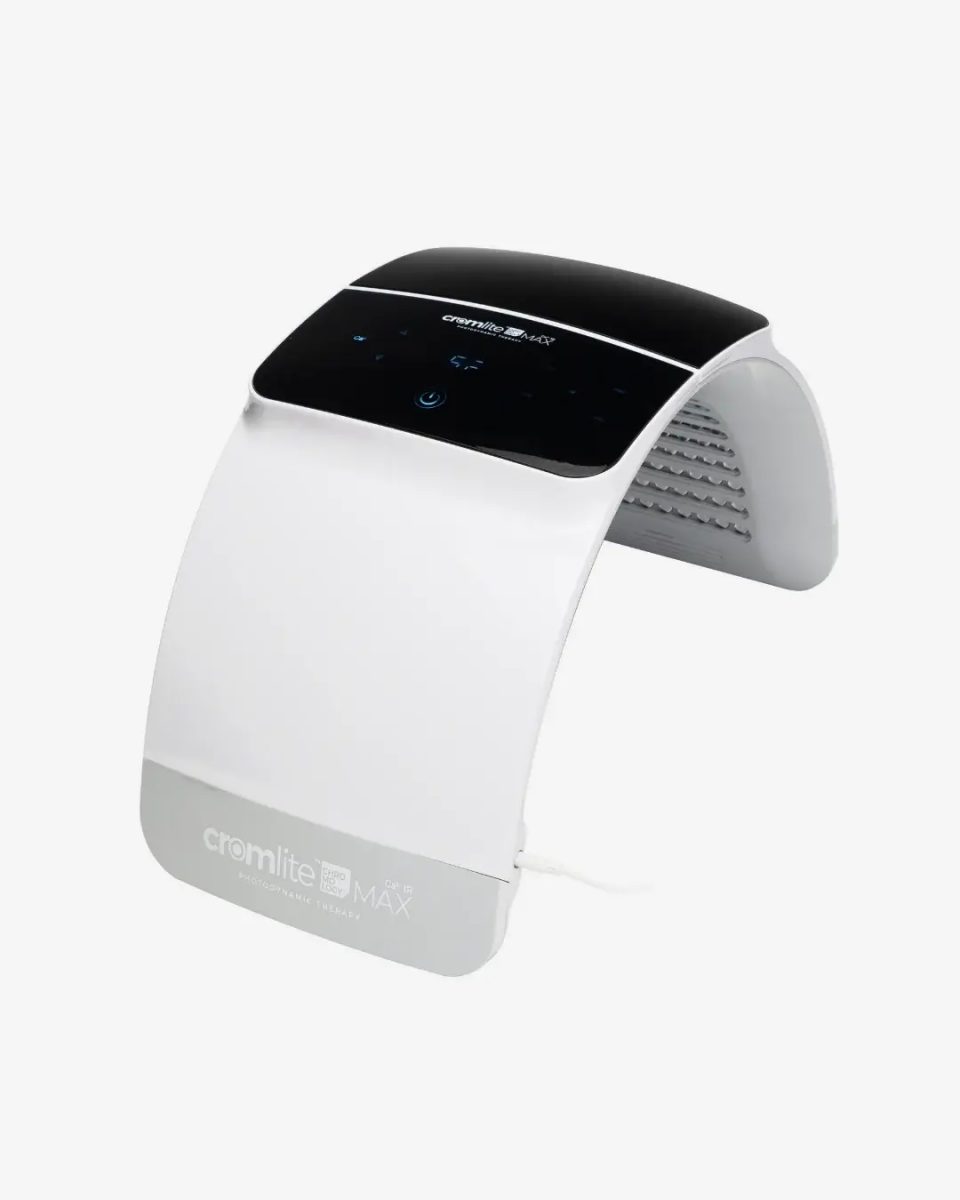
CROMLITE MAX: LED phototherapy for gentle supportive protocols
-
Primary role: non-invasive support when deep scar remodeling is not the immediate objective.
-
It should not be marketed as a replacement for medical acne care or as a device that structurally remodels a mature atrophic scar by itself.
-
Practice role: expands the non-invasive treatment portfolio. Explore CROMLITE MAX.
NeoFrax: RF microneedling for controlled texture remodeling
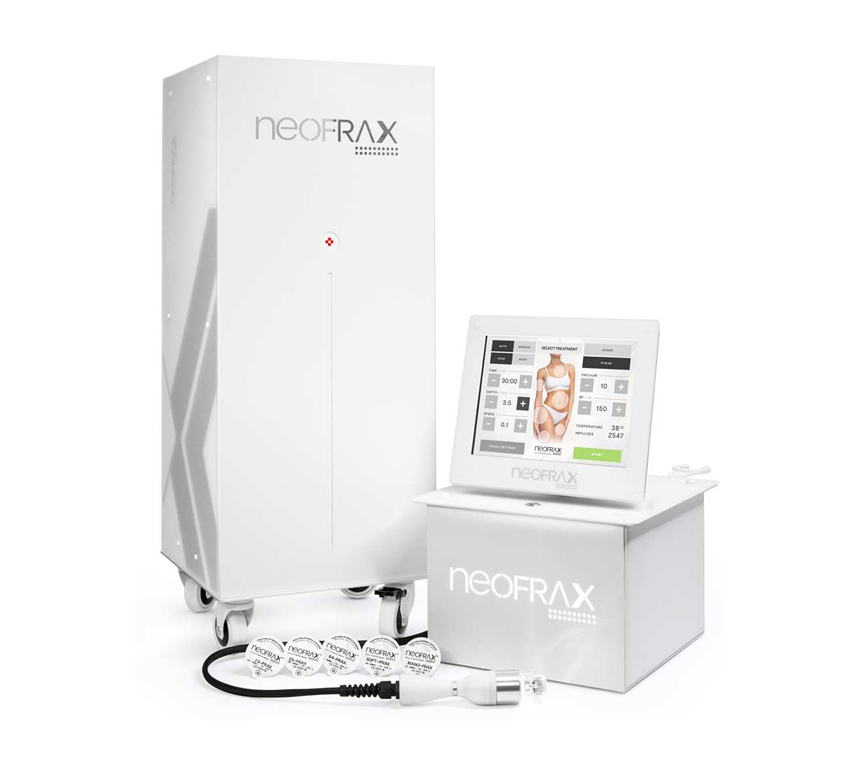
RF microneedling combines needle penetration with radiofrequency energy delivered into targeted tissue. A systematic review of fractional RF microneedling for acne scars found a growing evidence base for the technique while also noting that optimal protocols still need further standardization.
-
Primary role: controlled dermal remodeling when established texture changes or scars are the main concern.
-
Mechanism: fractional bipolar RF delivered through microneedle modules without classic full-surface ablation.
-
Practice role: NeoFrax RF microneedling is a logical option when scar and texture remodeling represent a meaningful part of client demand.
Dermablate: Er:YAG fractional and ablative resurfacing
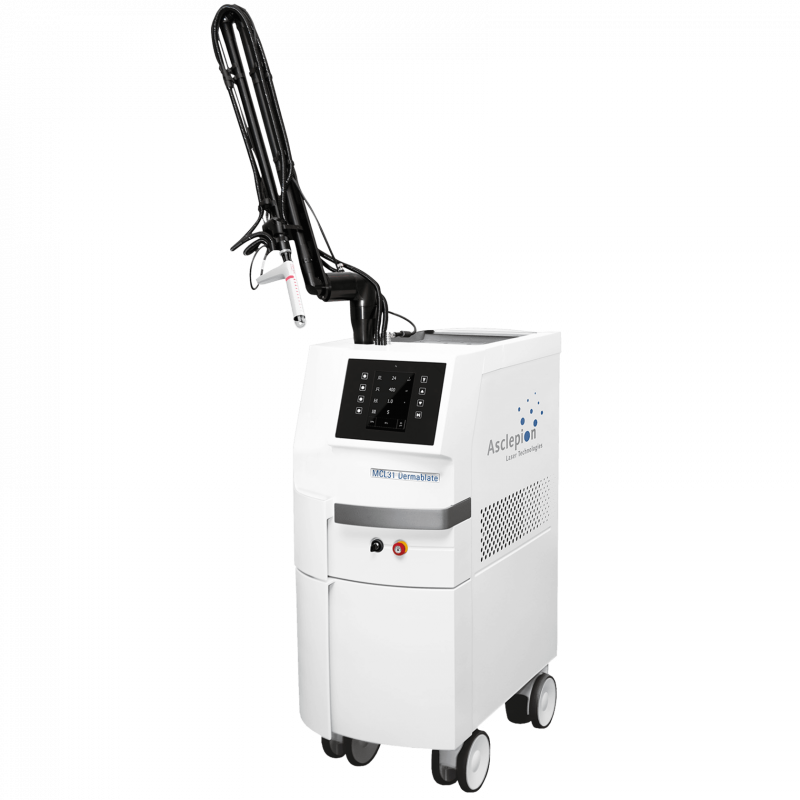
Er:YAG works through a different physical mechanism, using precise ablation and fractional resurfacing. It belongs to a more advanced laser category in which treatment depth, mode and recovery depend heavily on the indication and operator expertise.
-
Primary role: resurfacing and structural correction when treatment of the skin surface and texture is required.
-
Mechanism: 2940 nm Er:YAG with fractional and ablative treatment capabilities.
-
Practice role: Dermablate Er:YAG laser fits a more advanced laser service line and requires corresponding training and protocol discipline.
RF microneedling or laser for acne scars?
There is no universal winner. RF microneedling and Er:YAG use different mechanisms, and the choice depends on scar morphology, skin phototype, sensitivity, required depth, previous procedures, acceptable downtime and practitioner experience.
The American Academy of Dermatology guidance on acne-scar treatment also emphasizes individualized planning and notes that scar treatment generally follows acne control when breakouts are still occurring.
How a salon or clinic should choose technology
.png)
For a business owner, the question is not simply which device is popular. It is which problems dominate the client base and which level of procedure the team can deliver safely and consistently.
-
If active acne and reactive skin dominate, invest first in assessment skills, appropriate referral and gentle supportive care rather than buying a scar device as the only answer.
-
If established atrophic scars and uneven texture are common after acne is controlled, a remodeling platform such as NeoFrax becomes more commercially relevant.
-
If the clinic is building an advanced laser service line and is prepared for more intensive resurfacing protocols and recovery, Dermablate addresses a different level of need.
-
If the team is not yet confident in skin assessment and indication selection, training comes first. The LorEmA Estetic Basic Cosmetology Course covers skin diagnostics, acne, professional boundaries and fractional device-based methods.
Safety and professional boundaries
Severe inflammation, painful deep lesions, suspected infection, rapid worsening or an uncertain diagnosis are reasons to prioritize medical evaluation rather than escalating aesthetic energy-based treatment.
For marks and scars, the practitioner should also consider phototype, PIH risk, barrier condition, previous procedures and contraindications. Outcomes and recovery vary between clients, and procedures should be performed by appropriately trained professionals.
FAQ
Can active acne and acne scars be treated with one procedure?
There is no universal protocol. When inflammation is active, controlling the acne and confirming the diagnosis comes first; intensive scar remodeling is generally planned separately.
How can you tell a post-acne mark from a scar?
A mark primarily changes color. A scar changes structure and texture, creating a depression, wave-like surface or another persistent contour change.
What are the main types of atrophic acne scars?
The most widely used categories are ice-pick, boxcar and rolling scars. One person can have more than one type at the same time.
NeoFrax or Dermablate for acne scars?
They are not equivalent technologies. NeoFrax uses fractional RF microneedling, while Dermablate uses Er:YAG resurfacing. Choice depends on scar type, skin phototype, treatment depth and acceptable recovery.
Can RF microneedling be used on active inflammatory acne?
That decision requires an in-person assessment and contraindication screening. Significant active inflammation should be addressed before scar remodeling becomes the primary objective.
How should a practice choose a device for post-acne services?
Start with demand: active inflammation, residual marks or established scars. Then match the technology to team competence, protocol complexity and the downtime clients are willing to accept.
The right post-acne device starts with the right diagnosis
Active acne, post-inflammatory marks and acne scars are different treatment targets, and scar morphology adds another layer of decision-making. For practices in Moldova, this approach creates a clearer service portfolio than the promise that one machine can do everything.
If established scars and uneven texture are a core part of your client demand, NeoFrax can be evaluated as a dedicated RF microneedling direction. LorEmA Estetic can help match the technology to your client base, team competence and existing service portfolio.
